Home › Tuckpointing and Repointing
Our tuckpointing services in Germantown, TN restore failing mortar joints and protect your brick walls and chimneys from water damage. We carefully remove deteriorated mortar and replace it with new, color matched joints that blend with your existing brick. This detailed repointing work strengthens masonry and refreshes the overall appearance of your home.
Germantown Masonry provides professional tuckpointing throughout Germantown, TN, Tennessee and the surrounding area. Our licensed, insured crew delivers safe, clean, on-time work with a free estimate before anything begins. Call (901) 567-2004 or request your free quote.
Tuckpointing and Repointing for Germantown Brickwork
Brick homes and commercial buildings in Germantown hold up well, but our hot summers, sudden storms, and occasional freezing nights are hard on masonry joints. Over time, the mortar between your bricks dries out, cracks, or crumbles. That is where professional tuckpointing and repointing from Germantown Masonry comes in.
Tuckpointing is the process of removing deteriorated mortar, then installing new mortar so your brickwork is tight, weather resistant, and clean looking again. Repointing is the broader repair of mortar joints that focuses on structural integrity first, then appearance. In practice, the two overlap, and we combine both so your wall, chimney, or porch in Germantown, Tennessee is solid and attractive.
When mortar fails, water gets in, bricks loosen, and eventually you can see bowing walls, spalling brick faces, or leaks inside the home. Fixing bad mortar early is almost always cheaper than replacing bricks or rebuilding a wall later. Germantown Masonry focuses on stopping that damage cycle and restoring the original strength and look of your masonry, not just smearing on new mortar and hoping it holds.
Signs Your Masonry Needs Tuckpointing in Germantown
Homeowners in Germantown usually call us for tuckpointing after they notice specific warning signs. On chimneys, the most common issues are sand-like mortar granules on the roof or in the gutters, open gaps between bricks, or white streaks (efflorescence) caused by mineral-rich water weeping through the joints. On garden walls and porch steps, people often see loose bricks, hairline cracks in the joints that run several feet, or mortar that turns to powder when scraped with a key.
On older homes in neighborhoods like Dogwood Grove or near the Germantown Historic District, we often find mismatched past repairs. Newer, bright mortar patches sitting beside original, softer joints are a red flag. Hard, Portland-heavy mortar installed in the last few decades can damage softer historic brick, especially when our summer heat bakes moisture behind the face of the wall. We look for these compatibility issues because they influence how we plan the repointing.
Interior symptoms matter too. A musty smell around fireplaces, staining where a chimney passes through the attic, or small cracks radiating from the corners of masonry fireplaces can indicate leaking joints. These are situations where careful tuckpointing stops further water entry and helps protect framing, insulation, and drywall from rot and mold.
How Germantown Masonry Performs Professional Repointing
Effective tuckpointing and repointing start with clean, precise joint preparation. At Germantown Masonry we do not simply smear new mortar over old joints. We first assess the wall to determine joint depth, existing mortar type, and overall stability. Any loose or unstable bricks are addressed before we touch the joints.
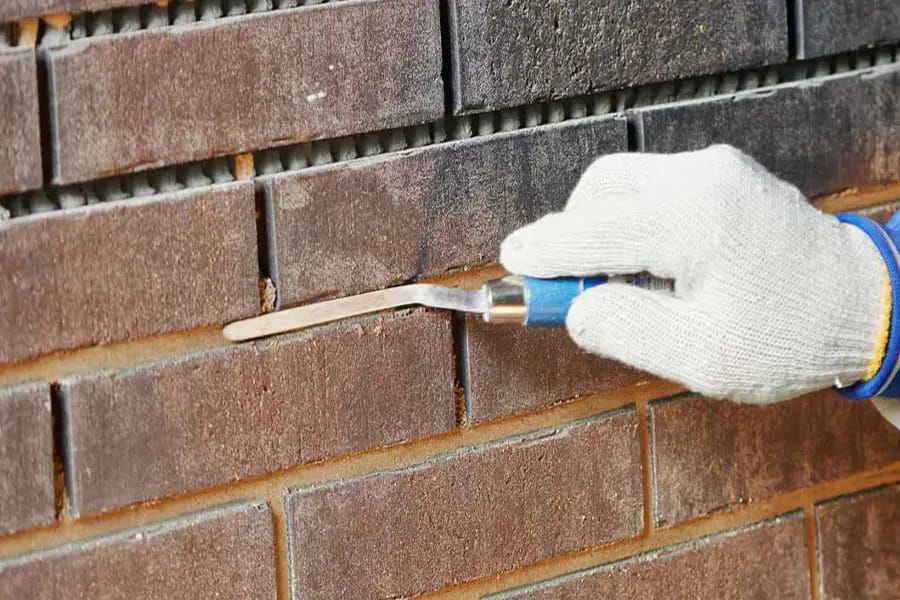
We then remove the failing mortar using grinders with masonry blades or hand chisels, depending on the fragility of the brick. On many Germantown homes with softer face brick, we rely more on hand tools to avoid chipping edges. Mortar is raked out to a depth of about two to two and a half times the joint width, usually at least half an inch, so the new mortar has enough “bite” to bond. All joints are then brushed or blown clean and lightly dampened so the new mortar cures evenly rather than drying out too fast in our summer heat.
Next we pack new mortar into the joints in layers, compacting each pass so there are no hidden voids. The final pass is struck with a profile that matches your existing joints, such as concave, flush, or weathered. Timing is critical. We wait for the mortar to reach a “thumbprint hard” stage, then tool and brush it so it bonds tightly to the brick edges. On hot or windy days in Germantown we may lightly mist the work or use shade to slow premature drying, which helps prevent hairline shrinkage cracks.
On chimneys and tall walls we set proper scaffolding or roof jacks for safe access. This allows us to maintain consistent joint depth and appearance from top to bottom, something that is impossible to achieve by stretching from a ladder. Once complete, we clean all surfaces without using aggressive acids that could etch the brick or wash out fresh mortar color.
Matching Mortar Color and Strength to Your Brick
A key difference with Germantown Masonry is the attention we give to mortar selection. Getting the color and strength right is essential for durability and appearance. We start by taking a small sample of your existing mortar and performing a field analysis. We check sand color and gradation, cement content, and how the mortar reacts to light scratching and water. This tells us whether we should be using a Type N, Type O, or other mix, and whether lime needs to be included for flexibility and vapor permeability.
Color matching is done using a combination of cement type, sand blend, and mineral pigments when needed. Many Germantown homes have warm, tan or buff sands in the original joints. If we use a standard gray mix, the repair stands out. We keep a library of local sand and pigment combinations that closely match common building phases in this area, from 1970s subdivisions to newer developments.
Strength compatibility is just as important. Mortar should generally be weaker and more flexible than the brick so that the joint takes the movement, not the brick face. This is especially critical for older chimneys or homes with hand-made or porous brick. Using a mortar that is too hard can cause bricks to crack or spall when moisture expands and contracts during our freeze-thaw cycles. By tailoring the mix, Germantown Masonry ensures your tuckpointing improves performance rather than creating new problems.
What Affects Tuckpointing Cost in Germantown
Tuckpointing and repointing costs vary from project to project, and we explain the drivers up front so you know what you are paying for. The first major factor is accessibility. A ground-level garden wall with clear access is much more efficient to work on than a tall chimney above a steep roof near Poplar Avenue. If scaffolding, lifts, or specialized roof staging is required, labor time and equipment costs increase.
The second factor is the condition and depth of deterioration. Light surface cracking that only requires shallow removal is faster to repair than deep, crumbling joints where mortar is missing several inches back. When bricks are spalled or loose, we must factor in brick replacement and sometimes rebuilding sections of the wall or chimney crown.
Third, complexity of appearance matters. Historic homes with fine joint profiles or tight, narrow joints demand more hand work. Decorative tuckpointing, where we create a contrasting fine line for visual effect, takes additional time and precise color work. Matching unusual mortar colors can involve sample panels and adjustment, which we include in our estimates.
Finally, scheduling and site conditions play a role. Working in peak summer heat or during wetter spring periods sometimes requires extra setup, tenting, or return visits for staged curing. Germantown Masonry provides written proposals that break down these factors so you can see how the scope, access, and finish requirements affect your overall investment.
Common Local Problems We Solve With Repointing
In Germantown we see a specific set of masonry issues that are particularly well suited to proper repointing. One frequent case is chimney leakage around flues and at the shoulders where the chimney widens near the roofline. Joints often erode faster in these areas because they catch more wind-driven rain. Repointing here, combined with a sound chimney cap and flashing inspection, typically stops staining on interior walls and ceilings near fireplaces.
Another recurring problem is step cracking on brick veneer walls, often near garage openings or where additions meet the original house. Some of these cracks are cosmetic and caused by minor settling. Others indicate that the original mortar has lost bond or that water slipping through joints is weakening the wall ties. We stabilize the area, repoint the joints, and, when necessary, install new anchors through the mortar bed so the brick veneer remains secure.
We are also called frequently to repair low walls around patios, pools, and driveways where sprinkler overspray and lawn irrigation keep the brick damp. Constant moisture, combined with fertilizer runoff, accelerates mortar decay and efflorescence. Our approach in these cases includes cleaning, salt management, careful repointing, and recommendations for drainage or irrigation adjustments so the repairs last.
For older properties, we often correct prior substandard repairs. That can mean removing smeared mortar that covers brick faces, grinding out mismatched patch joints, and re-establishing proper profiles. The goal is to bring the wall or chimney back to a condition where it sheds water correctly and looks like a single, coherent piece of masonry rather than a patchwork.
What to Expect When You Hire Germantown Masonry
When you contact Germantown Masonry for tuckpointing, we start with an on-site evaluation, not a guess from photos alone. We inspect all exposed masonry, test representative joints, and check for related issues such as failed caulking at windows, damaged flashing, or missing caps that might be contributing to the deterioration.
You receive a written scope that explains which areas will be repointed, how deep we will cut the joints, what mortar mix we plan to use, and whether any brick replacement or waterproofing treatments are recommended. If matching existing work is critical, we can prepare a small sample area so you can see the color and joint profile before we proceed with the full project.
On the job, expect dust control and careful protection of landscaping, roofs, and adjacent surfaces. We schedule work around weather so that mortar is not installed in heavy rain or in direct, extreme heat that would compromise curing. Most residential tuckpointing projects are completed within a few days, depending on size and access.
Before we leave, we walk the project with you to review the work. We point out what was done, discuss any underlying conditions we found, and give you practical maintenance advice, such as how often to visually inspect joints, what cleaning methods are safe, and when it might be time to recheck the area. Our goal is that your brickwork in Germantown, Tennessee looks better, performs better, and stays that way for many years.